Writing a professional resume is no longer just a formality when applying for jobs — it has become the factor that decides whether you reach the interview stage or get rejected within seconds. In 2026, most companies rely on ATS software to scan resumes automatically, and recruiters review hundreds of applications daily, so even a small mistake in your file can cost you an excellent opportunity.
The irony is that many job seekers believe the problem is a lack of experience or a shortage of jobs, when the real reason is often mistakes inside the resume itself: unprofessional formatting, irrelevant information, weak keywords, language errors, or a file that simply doesn't match the job. In this guide, we'll go through the most common resume mistakes and how to avoid them to boost your chances with both recruiters and modern screening systems.
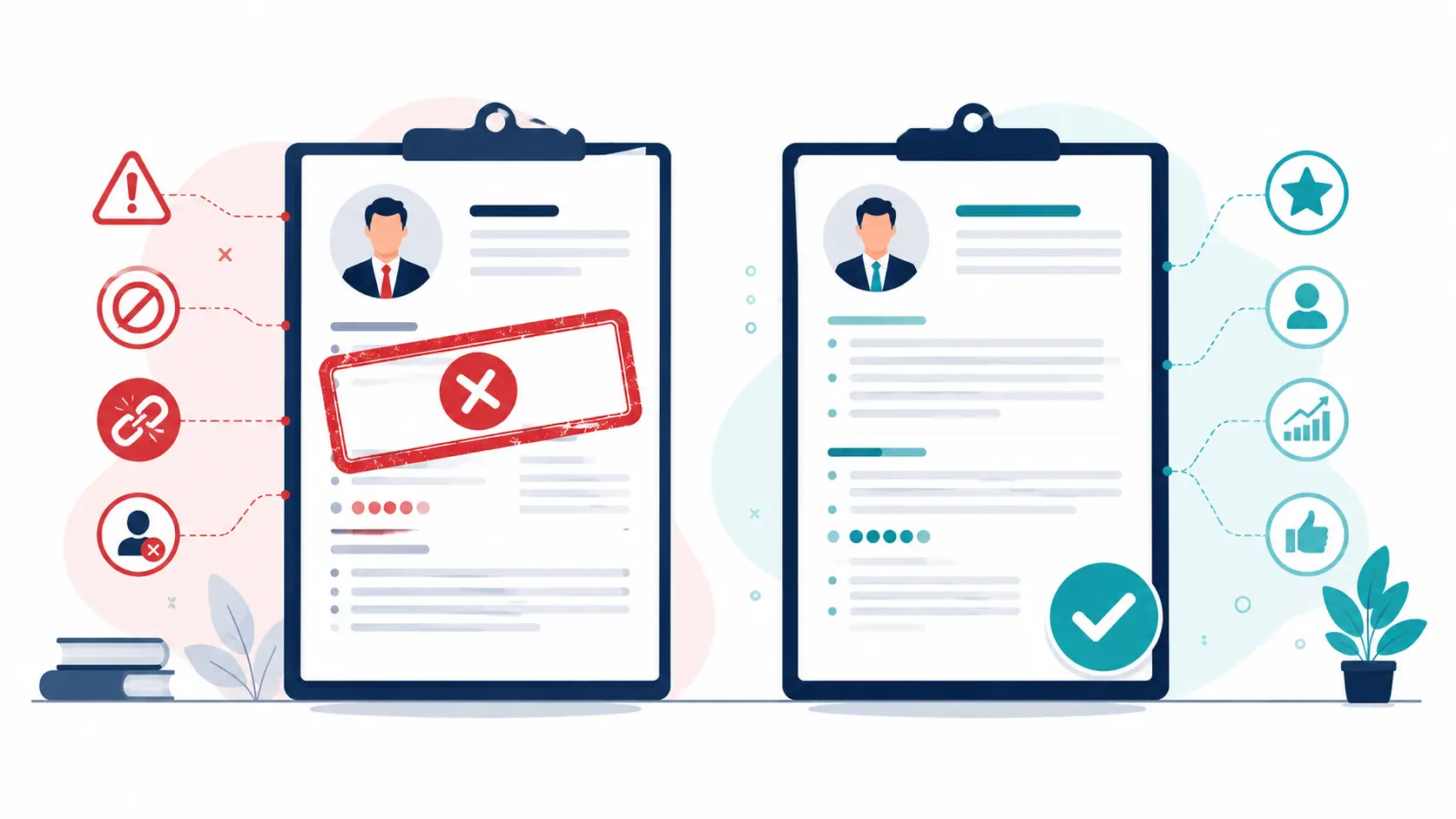
✍️"Your resume isn't a summary of what you did — it's proof of the value you can deliver. The mistake is rarely a lack of experience, but how you present it."
Why Resume Mistakes Lead to Rejected Applications
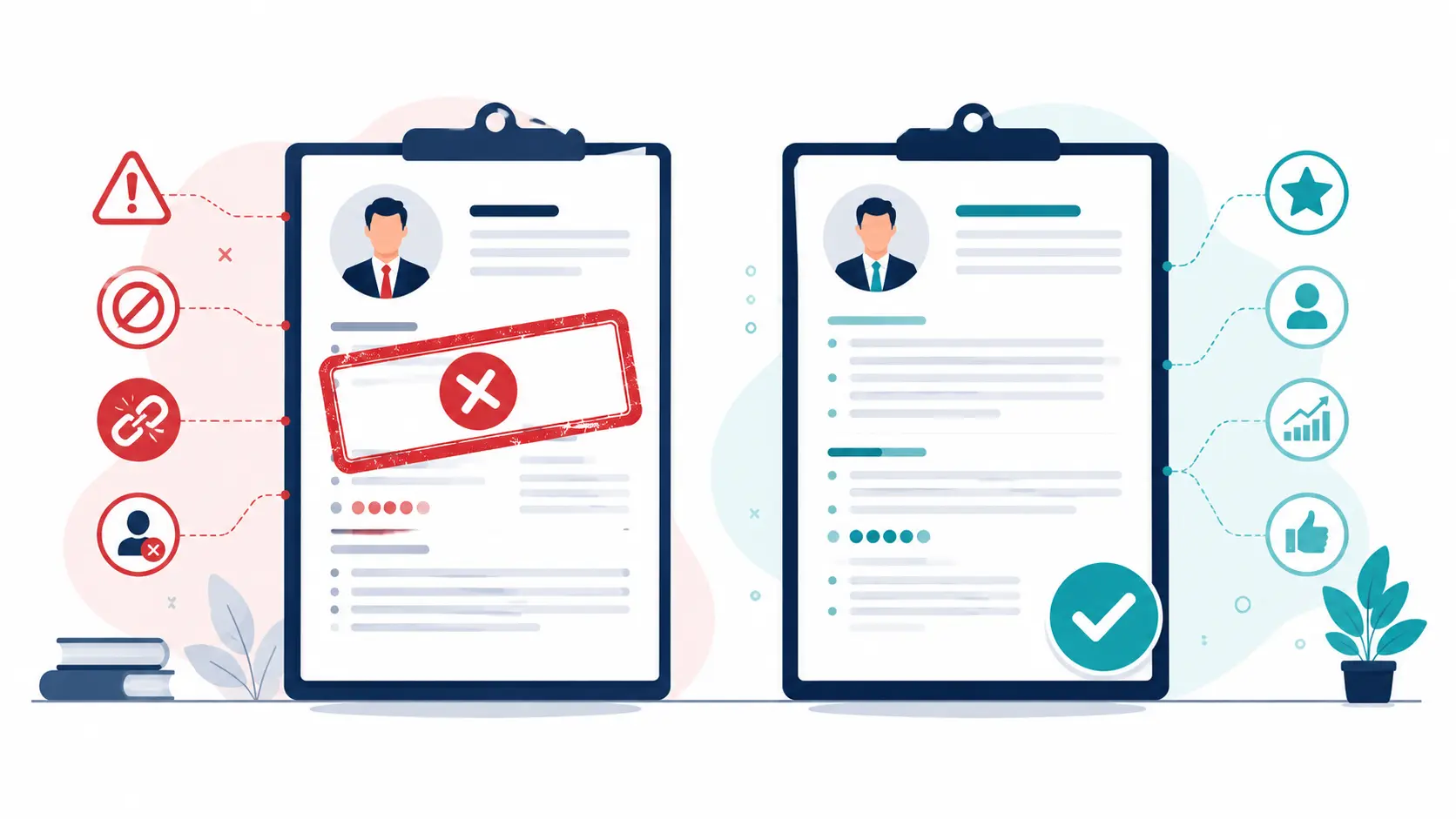
A recruiter doesn't have time to read every file in detail, so the initial decision is made within seconds. Before that, the ATS system has already analyzed your file searching for keywords, experience, and formatting. This means any technical or organizational mistake can keep you out of the candidate pool before a human even sees you. If your file is disorganized, contains errors, is excessively long, or fails to show your skills quickly, it will likely be ignored immediately.
If you want to build the right foundation first, check our guide on how to write a professional CV, then our guide on writing an ATS-friendly resume before you start fixing your mistakes.
1. Adding Irrelevant Work Experience
One of the most common mistakes is listing every past job, even if it has no connection to the target role. If you're applying for an accountant, web developer, or graphic designer position, there's no need to mention your work as a waiter seven years ago. This information adds no value, distracts the recruiter, and pads your file pointlessly. Focus only on relevant experience, required skills, achievements tied to the role, and transferable skills where they apply.
2. Listing Achievements Without Numbers
Many people write generic statements like "helped increase sales," "managed the team," or "improved company performance." The problem is these sentences are weak because they don't show the actual result. Instead of "increased sales," write "increased annual sales by 25% within eight months by developing a digital marketing strategy." Numbers give your file strength and credibility and prove your real impact.
3. Using Generic, Ineffective Skills
Some applicants fill their skills section with overused words like teamwork, organization, commitment, and critical thinking. The problem is that almost every applicant writes the same words, so they don't set you apart. Recruiters prefer measurable technical skills, such as:
Google Analytics
Advanced Excel
HTML & CSS
Python
Salesforce
Photoshop
4. Adding Obvious Basic Skills
In 2026, it no longer makes sense to list skills like "using a computer," "Microsoft Word," or "browsing the internet," because they're expected of nearly every applicant. Use this valuable space to showcase stronger skills that genuinely help you stand out.
5. Using an Overdesigned Resume
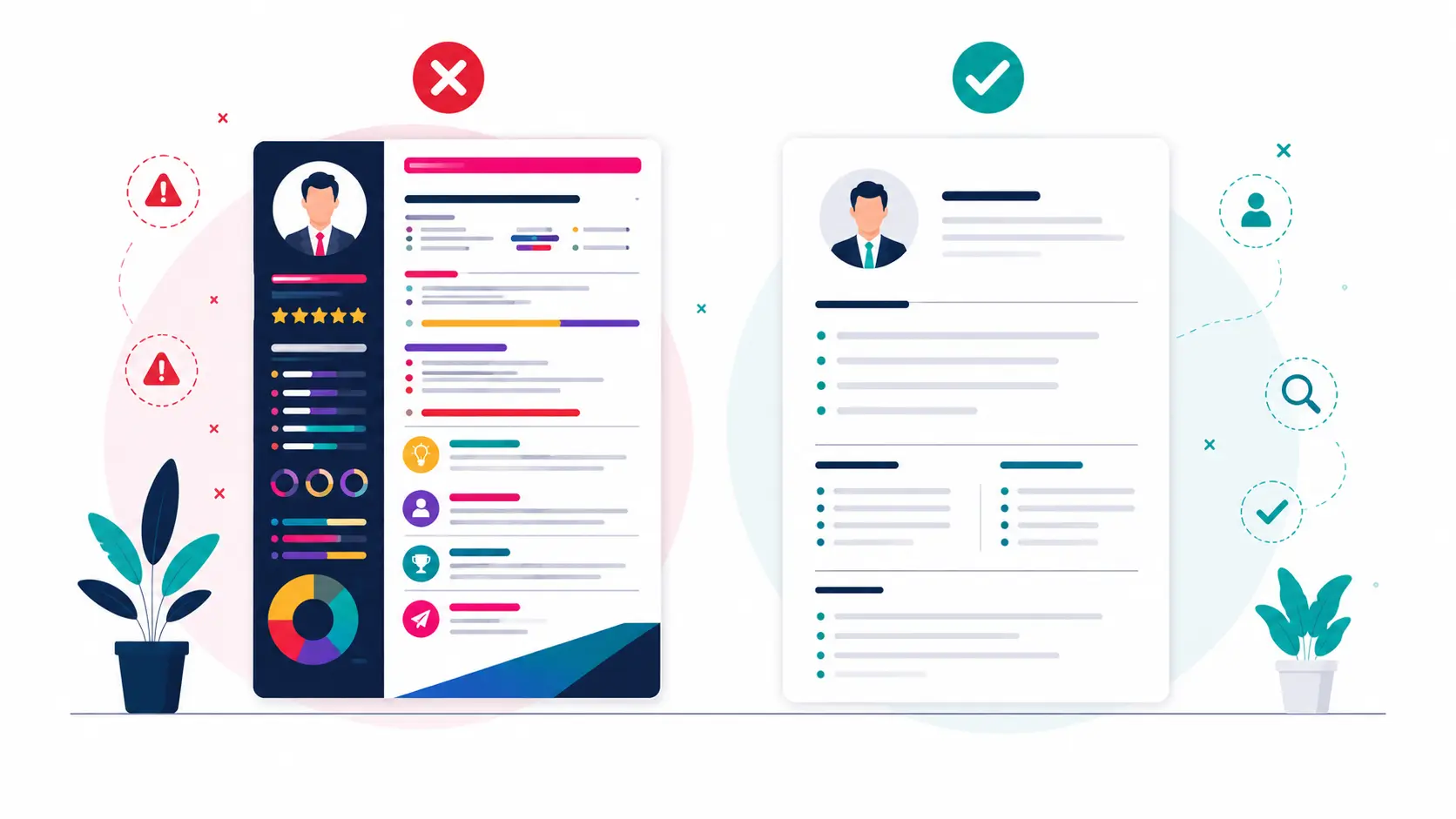
Some job seekers use a file full of colors, graphics, and infographics. While it may look attractive, it causes real problems: difficulty reading, incompatibility with ATS systems, and distraction for the recruiter. The golden rule is to keep your design simple, professional, clear, and easy to read.
6. Focusing on Responsibilities Instead of Results
There's a big difference between "what you did" and "what results you achieved." The weak sentence says "responsible for company marketing," while the strong sentence says "achieved a 40% increase in sales through digital marketing campaigns within six months." Achievements make your file far stronger than a dry job description.
7. Not Customizing the Resume for Each Job
Sending the same file to every job is one of the biggest mistakes, because each company looks for different skills, experience, and keywords. If you're applying for an Email Marketing role, focus on email campaigns, conversion rates, and marketing tools. If the role is Team Leader, focus on management, leading teams, and planning. This customization helps both the system and the recruiter quickly recognize your fit.
8. Choosing the Wrong Resume Format
There are several resume formats, the most notable being:
Reverse Chronological — the most professional and widely used; lists experience newest to oldest, is clear, ATS-friendly, and preferred by companies.
Functional — focuses on skills rather than timeline, suitable for those with employment gaps.
Combination — blends the two.
In most cases, the Reverse Chronological format is the smartest and safest choice with screening systems.
9. Saving the Resume in the Wrong Format
Some people send their file as a PNG or JPG image, which is a major mistake because ATS systems can't read images. The best formats are PDF and DOCX, and PDF usually remains the best option because it preserves formatting across all devices.
10. Using an Unprofessional File Name
The file name matters more than you'd think. A name like resume-final-new-2026-last.pdf looks messy, while a name like Ahmed-Mohamed-Resume.pdf looks professional and makes it easy for the recruiter to find your file among dozens of others.
11. Spelling and Grammar Mistakes
Language errors in your file create a very poor impression, especially if you mention "communication skills" and "attention to detail" while the file itself is full of mistakes. Before sending, proofread the text more than once, use grammar-checking tools, and verify your email and phone number carefully.
Table: Common Resume Mistakes and Their Impact
Mistake | Impact |
|---|---|
Adding irrelevant information | Lowers file quality |
Poor formatting | Hard to read |
Language errors | Unprofessional impression |
ATS incompatibility | Automatic rejection |
Using generic words | Weak differentiation |
Resume too long | Recruiter loses interest |
12. Ignoring Employment Gaps
One thing recruiters notice quickly is periods of unemployment. Trying to hide gaps often raises more suspicion than explaining them. If you had a break due to studies, health, travel, or a career change, it's better to explain it briefly and professionally. For example: "2024 — 2025: Developed professional skills and completed advanced certifications in digital marketing and data analytics." This is far better than leaving vague blanks.
13. Failing to Explain a Career Change
If you're moving from one field to another — like an accountant becoming a UI/UX Designer, or a sales rep becoming a Digital Marketer — you must explain the transition smartly, otherwise the recruiter may think you're applying randomly. Handle this with a strong professional summary, a clear skills section, projects related to the new field, and recent certifications and courses that prove you're serious about the switch.
14. Making the Resume Too Long
A very common mistake is writing an overly long file. A recruiter doesn't want to read your entire life story. The practical rule is one page for recent graduates and one to two pages maximum for experienced professionals. Any outdated or irrelevant information should be removed.
15. Writing a Resume That's Too Short and Weak
On the other hand, some people write a file that's far too short and lacks enough information, which is common among students and recent graduates. If you don't have strong work experience, strengthen your file by adding personal projects, freelance work, volunteering, university activities, certifications, and training courses.
16. Contact Information Mistakes
You might spend hours writing a professional file and still lose the opportunity because of a wrong phone number, a misspelled email, or a broken LinkedIn link. Before sending, double-check your email, phone number, links, and file name more than once, because a single mistake here can undo all your effort.
17. Using an Unprofessional Email Address
Your email creates an immediate impression of your personality. Addresses like footballking2020@ or gamerhero@ look unserious. It's always better to use a simple, formal format like firstname.lastname@gmail.com. The simpler and more professional your email, the better.
18. Lying on Your Resume
Some applicants exaggerate or add fake experience, skills they don't have, or fabricated certifications. This may help temporarily, but it causes big problems later during interviews, tests, and actual work. The golden rule: be honest, but present your real skills in a professional way that highlights their value.
19. Ignoring ATS Optimization
In 2026, most companies rely on ATS systems to scan resumes automatically, searching for specific keywords, skills, and experience. If the system doesn't find what it's looking for, your file may be rejected before anyone sees it. To make your file compatible:
Use keywords taken from the job description such as SEO, Excel, Data Analysis, and Project Management, and weave them in naturally.
Use simple formatting and avoid graphics, complex tables, and excessive icons.
Choose a professional template that's clear, organized, and ATS-friendly.
Table: Mistakes That Cause ATS Rejection
Mistake | Result |
|---|---|
Missing keywords | Automatic rejection |
Using images and graphics | Unreadable data |
Complex formatting | Parsing errors |
Using JPG files | File not accepted |
Listing irrelevant skills | Weak ranking |
Best Resume Tips for 2026
To summarize everything above into practical steps:
Focus on achievements rather than just describing duties.
Use real numbers, because they add credibility.
Keep the design simple — overdesign hurts more than it helps.
Proofread carefully before sending.
Optimize your file for ATS systems, especially with large companies.
For a deeper look at modern hiring standards, you can check the LinkedIn Help Center, one of the most trusted hiring resources in the world.
Final Thoughts
Avoiding common resume mistakes can dramatically improve your chances of getting hired in 2026, especially as ATS systems evolve and job competition increases. Always remember that your file is not just a piece of paper — it's the first impression a recruiter forms of you. Focus on professional content, highlighted achievements, relevant keywords, clean formatting, and customizing the file for each job. All these small details could be the real reason you land your next interview.
Start exploring the latest job opportunities on NabdJobs, and apply with an error-free resume that boosts your chances.